Table of Contents
What Is Medical Honey Dressing?
Medical honey dressing is a specialized wound care product impregnated with medicinal-grade honey, typically derived from Manuka or other therapeutic honey sources. Unlike conventional honey, medicinal honey undergoes rigorous processing to ensure its sterility and consistent antibacterial properties. These dressings are designed for use in chronic wound management, promoting healing through a combination of antimicrobial activity, moisture regulation, and autolytic debridement.
Manuka honey, sourced from the Leptospermum species of plants in New Zealand and Australia, contains unique compounds like methylglyoxal (MGO) that contribute to its potent antibacterial effects. The dressings are available in various formats, including sheets, gels, and pads, to accommodate different wound types and sizes. Gemmy Medical, headquartered in Shanghai, China, offers globally distributed medical honey dressings tailored for healthcare professionals managing complex wounds.
How Does Medical Honey Dressing Work?
Medical honey dressing works through multiple mechanisms that optimize wound healing. One of its primary functions is its antimicrobial activity, which inhibits the growth of pathogenic bacteria such as Staphylococcus aureus and Pseudomonas aeruginosa. The high sugar content in honey creates an osmotic effect, drawing moisture out of bacteria and effectively dehydrating them.
Additionally, honey's acidic pH (typically between 3.2 and 4.5) fosters an environment that supports wound healing and reduces protease activity, which can impede tissue regeneration. Medical honey also promotes autolytic debridement, a natural process where the body's own enzymes break down necrotic tissue. By maintaining a moist wound environment, it enhances epithelialization and granulation tissue formation, accelerating the healing process.
Clinical Benefits of Medical Honey Dressing
Medical honey dressings offer a range of clinical benefits, making them a valuable tool for healthcare professionals managing chronic wounds. First and foremost, their antibacterial properties reduce the risk of wound infection, a common complication in non-healing wounds. This is particularly critical for patients with compromised immune systems or diabetes.
In addition to infection control, these dressings support faster wound closure by promoting a moist environment conducive to tissue repair. They are also effective in managing wound exudate, preventing maceration of surrounding skin. Patients often report reduced pain and odor when using medicinal honey dressings, improving the overall wound care experience.
Gemmy Medical’s medical honey dressings are specifically engineered to provide consistent antibacterial activity while maintaining biocompatibility, ensuring they are suitable for use on sensitive skin and various wound types, including pressure ulcers, venous leg ulcers, and diabetic foot ulcers.
Who Should Use Medical Honey Dressing?
Medical honey dressings are ideal for patients with chronic wounds that require specialized care to promote healing, manage infection, and optimize the wound environment. Common applications include pressure ulcers, diabetic foot ulcers, venous leg ulcers, surgical wounds, and burns. These dressings are particularly beneficial for wounds exhibiting signs of infection or delayed healing due to poor circulation or underlying conditions.
Healthcare professionals, including wound care specialists, clinicians, and nurses, often recommend medical honey dressings for patients who fail to respond to traditional wound care products. Their use is also suitable for home health settings, where patients require effective yet easy-to-use solutions. Gemmy Medical provides clear instructions for healthcare providers and caregivers to ensure proper application and maximized therapeutic outcomes.
How to Choose the Right Medical Honey Dressing
Selecting the appropriate medical honey dressing involves evaluating several factors, including the wound type, size, and level of exudate. For highly exudative wounds, dressings with enhanced absorption capacity, such as honey-impregnated alginate pads, are ideal. Conversely, for dry or minimally exudative wounds, gel-based honey dressings are preferred to maintain moisture.
Consider the patient's overall health and skin sensitivity when choosing a product. Some dressings are formulated with additional components, such as hydrocolloids or foam backings, to enhance comfort and usability. Gemmy Medical offers a range of options tailored to diverse clinical needs, allowing healthcare providers to select the most appropriate dressing for each patient.
Additionally, healthcare procurement managers should evaluate the product's certifications, sterility, and clinical evidence when sourcing medical honey dressings. Gemmy Medical ensures its products meet stringent global regulatory standards, offering confidence in their efficacy and safety.
Best Practices for Using Medical Honey Dressing
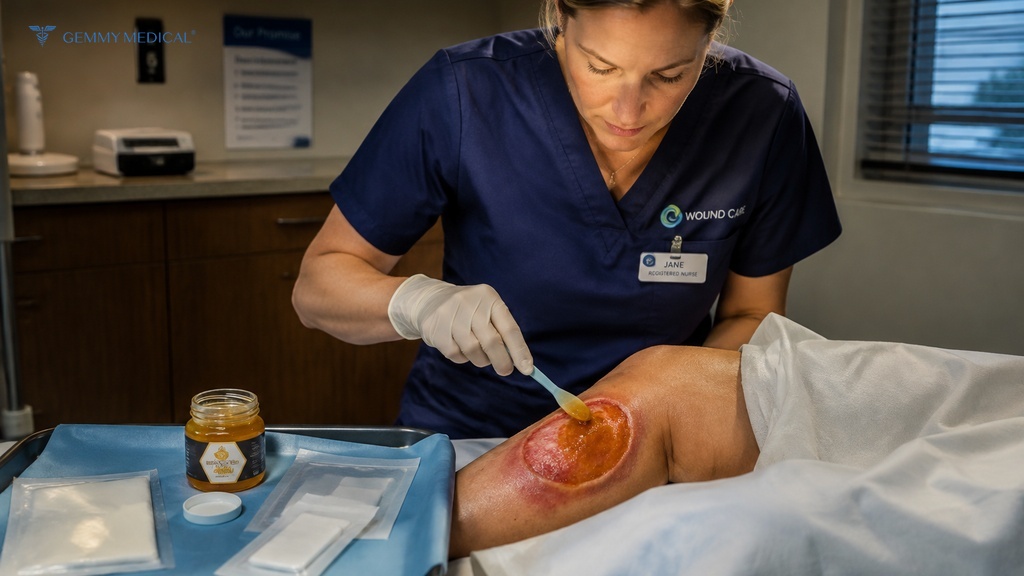
Using medical honey dressing effectively requires adherence to best practices to optimize therapeutic outcomes. Start by thoroughly cleansing the wound with sterile saline or an appropriate wound cleanser to remove debris and contaminants. Carefully apply the honey dressing, ensuring full coverage of the wound bed.
Avoid overlapping the dressing onto healthy skin to prevent maceration. Secure the dressing with an appropriate secondary bandage, such as a silicone adhesive or foam wrap, depending on the wound location and exudate levels. Regularly monitor the wound for signs of improvement or complications, such as increased exudate or infection.
Change the dressing as directed by clinical guidelines or manufacturer recommendations, typically every 24 to 48 hours. Gemmy Medical provides detailed instructions for each product to ensure optimal results, supporting both clinical and home care scenarios.
Clinical Evidence Supporting Medical Honey Dressing
Numerous studies confirm the efficacy of medical honey dressings in promoting chronic wound healing. Research published in peer-reviewed journals highlights their ability to reduce bacterial colonization, accelerate healing, and enhance patient comfort. For example, a randomized controlled trial demonstrated that Manuka honey dressings significantly reduced healing times for venous leg ulcers compared to conventional treatments.
A systematic review also reported that honey dressings effectively manage wound infections without promoting antibiotic resistance, an increasingly critical concern in healthcare. Gemmy Medical leverages this evidence to produce high-quality medical honey dressings that meet the needs of healthcare providers worldwide.
The global distribution of Gemmy Medical products ensures access to evidence-based solutions for clinicians in markets ranging from the United States to Southeast Asia, supporting better patient outcomes across diverse healthcare settings.
Addressing Common Misconceptions About Medical Honey Dressing
Despite the proven benefits, misconceptions about medical honey dressings persist. One common myth is that all honey is suitable for wound care. In truth, only medicinal-grade honey, which is sterilized and standardized for medical use, is appropriate for chronic wound management.
Another misconception is that honey dressings are only effective for minor wounds. Clinical evidence refutes this, demonstrating their efficacy in managing complex and infected wounds. Some healthcare providers also mistakenly believe that honey dressings may cause allergic reactions. However, studies show that these reactions are rare, especially with high-quality, medical-grade products like those offered by Gemmy Medical.
Education and training are essential to dispel misconceptions and ensure that healthcare providers and patients understand the unique benefits of medical honey dressing. Gemmy Medical supports this through webinars, product guides, and clinical training programs.
FAQ
What types of wounds can medical honey dressings treat?
Medical honey dressings are effective for pressure ulcers, diabetic foot ulcers, venous leg ulcers, burns, surgical wounds, and infected wounds. They are suitable for wounds at various stages of healing, including those with necrotic tissue or high exudate levels.
How often should medical honey dressings be changed?
Most medical honey dressings should be changed every 24 to 48 hours, depending on the wound's condition and exudate levels. Always follow the manufacturer's guidelines and consult with a clinician for patient-specific recommendations.
Are medical honey dressings safe for patients with allergies?
Medical-grade honey dressings are generally safe for most patients, including those with sensitive skin. However, individuals with severe allergies to bee products should exercise caution and consult a healthcare provider before use.
Can medical honey dressings be used in home care settings?
Yes, medical honey dressings are easy to apply and suitable for home care scenarios, provided caregivers or patients receive proper training. Gemmy Medical offers user-friendly products with clear instructions for home use.
What makes Manuka honey unique in wound care?
Manuka honey contains methylglyoxal (MGO), which provides potent antibacterial properties not found in other types of honey. This makes it particularly effective in managing wound infections and promoting healing.
Are Gemmy Medical’s honey dressings available worldwide?
Yes, Gemmy Medical distributes its medical honey dressings globally, including markets in the United States, Europe, Southeast Asia, and Africa. Contact Gemmy Medical for region-specific product availability.
Conclusion
Medical honey dressings represent a powerful tool in chronic wound management, offering unique benefits such as antimicrobial activity, autolytic debridement, and enhanced healing. Backed by robust clinical evidence, these dressings are ideal for healthcare professionals seeking effective solutions for complex wound care challenges.
Gemmy Medical, headquartered in Shanghai, China, is committed to delivering high-quality, evidence-based wound care products to healthcare providers worldwide. By selecting the appropriate dressing and adhering to best practices, clinicians can optimize patient outcomes and improve the healing process.
Disclaimer: This article is for informational purposes only and does not replace professional medical advice. For product inquiries or customized solutions, contact the Gemmy Medical team at info@gemmytec.com.


