Table of Contents
What Is an Air Disinfection System?
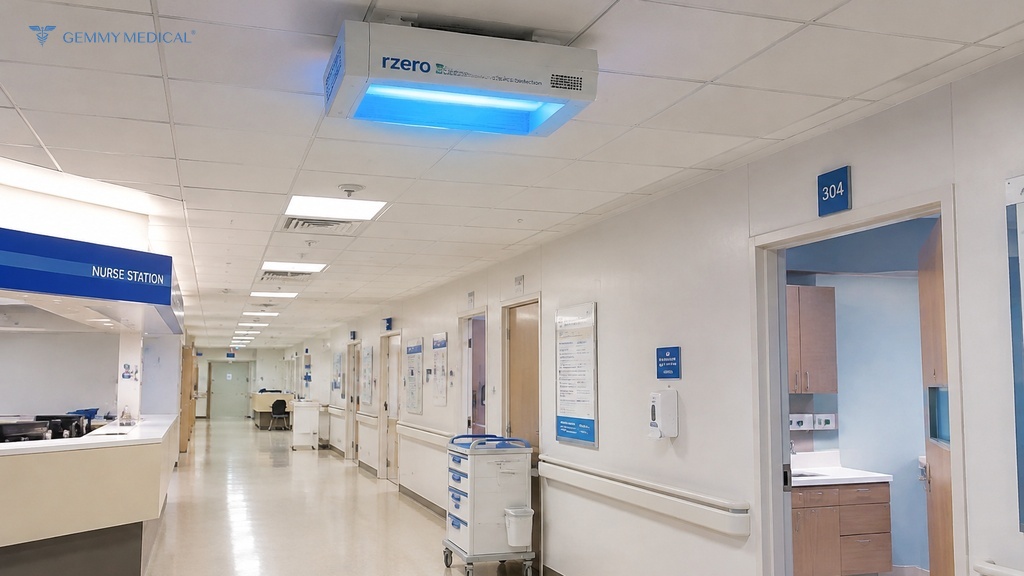
An air disinfection system is a technological solution designed to remove or neutralize airborne pathogens, particulate matter, and harmful microorganisms from indoor environments. These systems are particularly critical in healthcare settings such as clinics and hospitals, where infection control and air quality are paramount. By utilizing advanced technologies such as UV germicidal irradiation (UVGI), HEPA filtration, and ionization, air disinfection systems help create a safer and healthier environment for patients, staff, and visitors.
At Gemmy Medical, headquartered in Shanghai, China, we specialize in air disinfection systems tailored for clinical applications. Our solutions are engineered to meet stringent healthcare standards across global markets, including the United States, Europe, and Southeast Asia. Whether combating airborne bacteria or preventing cross-contamination, air disinfection systems are indispensable for maintaining optimal hospital air quality.
How Do Air Disinfection Systems Work?
Air disinfection systems operate through one or more mechanisms to neutralize pathogens effectively:
- UV Germicidal Irradiation (UVGI): UVGI uses ultraviolet light in the germicidal wavelength range (typically 254 nm) to disrupt the DNA of bacteria, viruses, and fungi, rendering them unable to replicate or cause infection.
- HEPA Filtration: High-Efficiency Particulate Air (HEPA) filters capture particles as small as 0.3 microns with up to 99.97% efficiency. These filters are particularly effective against airborne allergens, spores, and particulate matter.
- Ionization: Ionizers release charged ions into the air to attract and neutralize pollutants. The ions bond with airborne particles, causing them to settle and become easier to filter.
In healthcare environments, these systems are integrated into HVAC units or standalone devices to ensure continuous air purification. Gemmy Medical’s air disinfection solutions combine multiple technologies to maximize efficacy, particularly in high-risk areas such as operating rooms, isolation wards, and ICUs.
Clinical Benefits of Air Disinfection Systems
Implementing air disinfection systems in clinics and hospitals yields several critical benefits:
- Reduction in Healthcare-Associated Infections (HAIs): Airborne pathogens contribute to HAIs, which impact patient outcomes and increase healthcare costs. Air disinfection systems help mitigate this risk by continuously purifying the air.
- Improved Patient Recovery: Cleaner air environments support faster recovery for immunocompromised patients and those with respiratory conditions, such as asthma or COPD.
- Enhanced Staff Safety: Healthcare workers face elevated exposure to airborne pathogens. Air disinfection systems create a safer work environment by reducing contaminants.
- Compliance with Regulations: Many countries have stringent air quality standards for healthcare facilities. Air disinfection systems help clinics and hospitals meet these requirements seamlessly.
Gemmy Medical’s advanced systems are backed by clinical evidence demonstrating their efficacy in reducing airborne microbial loads in hospital settings. Our global presence ensures access to high-quality products designed for diverse healthcare infrastructures.
Home Use vs. Clinical Use of Air Disinfection Systems
While air disinfection systems are increasingly popular in residential settings, their application in clinical environments is far more complex and demanding. Home-use systems typically focus on comfort and allergen reduction, whereas clinical systems prioritize infection control and regulatory compliance.
Clinical-grade systems must meet rigorous performance standards, including the ability to eliminate a higher density of airborne pathogens. For example, Gemmy Medical’s systems include UVGI components specifically calibrated for hospital-grade disinfection. Additionally, clinical systems must integrate seamlessly into existing HVAC setups and operate continuously without compromising energy efficiency.
Procurement managers and healthcare professionals should carefully evaluate the specifications of air disinfection solutions to ensure they align with clinical requirements. Gemmy Medical offers customizable solutions designed for both high-risk and general-purpose healthcare environments.
Who Should Use Air Disinfection Systems?
Air disinfection systems are essential for a wide range of healthcare facilities and scenarios:
- Hospitals: Particularly critical in operating rooms, ICUs, and isolation wards where infection control is paramount.
- Clinics: General practitioners, dental offices, and outpatient facilities benefit from air disinfection systems to enhance patient safety.
- Long-Term Care Facilities: Nursing homes and rehabilitation centers can prevent outbreaks among vulnerable populations.
- Laboratories: Protecting sensitive experiments and staff from airborne contamination.
Air disinfection systems are also recommended for environments with high foot traffic, such as emergency rooms and waiting areas. Gemmy Medical provides tailored solutions to meet the specific demands of different healthcare sectors, ensuring compliance with infection prevention protocols.
How to Choose the Right Air Disinfection System
Choosing the appropriate air disinfection system for a clinic or hospital requires careful consideration of several factors:
- Performance Metrics: Evaluate the system’s Clean Air Delivery Rate (CADR), pathogen removal efficacy, and airflow capacity.
- Technology Integration: Systems combining UVGI, HEPA filtration, and ionization offer comprehensive air purification.
- Regulatory Compliance: Ensure the system meets local and international healthcare air quality standards.
- Scalability: Choose systems that can be customized for different room sizes and infection control zones.
- Maintenance Requirements: Consider ease of filter replacement and long-term operational costs.
Gemmy Medical’s air disinfection solutions are designed with these criteria in mind, offering superior performance and reliability for healthcare environments worldwide.
Best Practices for Implementing Air Disinfection Systems
Proper implementation of air disinfection systems is vital to achieving optimal results. Here are key best practices:
- Conduct an Air Quality Assessment: Evaluate existing air quality conditions to identify areas requiring priority disinfection.
- Install Systems Strategically: Position units near HVAC intakes, high-risk patient areas, and spaces with high occupancy.
- Regular Maintenance: Develop a schedule for cleaning and replacing filters, as well as inspecting UVGI lamps.
- Train Staff: Educate healthcare workers on the importance of air disinfection and proper system operation.
Gemmy Medical provides expert guidance and installation support to ensure seamless integration of air disinfection systems into healthcare facilities.
Clinical Examples and Case Studies
Air disinfection systems have demonstrated significant efficacy in real-world clinical settings. For example, a major hospital in Southeast Asia implemented Gemmy Medical’s UVGI-based system in its ICU. Within three months, the facility reported a 40% reduction in airborne pathogen levels, alongside improved patient recovery rates.
Similarly, dental clinics in Europe using portable HEPA filtration units from Gemmy Medical achieved better compliance with infection control guidelines, reducing aerosolized contaminants during procedures.
These case studies underline the importance of tailored air disinfection solutions in diverse healthcare environments. Gemmy Medical continues to support global healthcare providers with evidence-based products designed to combat airborne infection risks effectively.
FAQ
What is the primary purpose of air disinfection systems in healthcare?
Air disinfection systems in healthcare aim to reduce airborne pathogens and particulate matter, thereby minimizing the risk of healthcare-associated infections (HAIs) and improving patient and staff safety.
How does UVGI technology work in air disinfection systems?
UVGI technology uses ultraviolet light at germicidal wavelengths to disrupt the DNA of microorganisms, preventing them from replicating and causing infection. It is particularly effective against viruses, bacteria, and fungi.
Are air disinfection systems safe for use in pediatric wards?
Yes, air disinfection systems are safe for pediatric wards when installed and maintained properly. Systems designed by Gemmy Medical are calibrated to operate without emitting harmful byproducts, ensuring a safe environment for children.
How often should filters and UVGI lamps be replaced?
HEPA filters typically require replacement every 6–12 months, depending on usage and air quality conditions. UVGI lamps should be inspected regularly and replaced approximately every 8,000–10,000 hours of operation.
Can air disinfection systems be integrated into existing HVAC systems?
Yes, many air disinfection systems, including Gemmy Medical’s solutions, are designed to integrate seamlessly into existing HVAC systems for continuous air purification in healthcare facilities.
What are the cost considerations for air disinfection systems?
Cost considerations include initial purchase, installation, maintenance, and energy consumption. Gemmy Medical offers scalable solutions to suit various budgets without compromising efficacy.
Conclusion
Air disinfection systems are essential tools for enhancing air quality and infection prevention in healthcare environments. By leveraging advanced technologies such as UVGI, HEPA filtration, and ionization, these systems address critical challenges in clinics and hospitals worldwide. Healthcare professionals, procurement managers, and wound care specialists can rely on Gemmy Medical’s expertise to deliver high-performance air disinfection solutions tailored to their needs.
Disclaimer: This article is for informational purposes only and does not replace professional medical advice. For product inquiries or customized solutions, contact the Gemmy Medical team at info@gemmytec.com.
What Is an Air Disinfection System?
Air disinfection systems are indispensable in today’s world, particularly in environments where maintaining clean and sterile air can mean the difference between health and illness. These systems are designed to neutralize airborne pathogens, including viruses, bacteria, and fungi, while also capturing particulate matter such as dust, pollen, and smoke. They play a significant role in controlling airborne contaminants in both healthcare and non-healthcare settings.
In healthcare facilities, the stakes are even higher. Hospitals and clinics are hubs for people who are already vulnerable due to illness or ongoing medical treatments. The air they breathe must be free from pathogens to prevent additional complications or healthcare-associated infections (HAIs). For example, patients in intensive care units (ICUs) are often immunocompromised, making them especially susceptible to airborne infections. Having a robust air disinfection system in place can significantly lower the risk of cross-contamination and create a safer environment for both patients and healthcare workers.
Furthermore, these systems are critical in non-healthcare environments where air quality is a concern, such as schools, offices, and public transportation. The global COVID-19 pandemic has brought air quality into sharper focus, driving demand for effective air disinfection solutions across various sectors.
Gemmy Medical has developed a range of air disinfection systems that cater to diverse needs, from small outpatient clinics to large hospitals. By leveraging cutting-edge technology and adhering to stringent global standards, these systems offer a reliable solution for maintaining superior air quality in environments where it is most needed.
How Do Air Disinfection Systems Work?
Air disinfection systems are built on advanced technologies that work individually or in combination to eliminate airborne contaminants effectively. Here’s how each technology works in more detail:
- UV Germicidal Irradiation (UVGI): Ultraviolet light in the germicidal wavelength range (typically 200–280 nanometers) disrupts the DNA or RNA of microorganisms. By breaking apart the molecular bonds in their genetic material, UVGI renders pathogens incapable of replicating. This makes UVGI an effective tool against a wide array of pathogens, including influenza viruses, coronaviruses, and tuberculosis-causing bacteria. For example, in a hospital setting, UVGI systems can be used to disinfect the air in operating rooms, ensuring that airborne pathogens do not compromise sterile surgical procedures.
- HEPA Filtration: High-Efficiency Particulate Air (HEPA) filters capture particles as small as 0.3 microns with an efficiency rate of 99.97%. This technology is particularly effective against allergens, mold spores, and fine dust particles. HEPA filters are commonly used in isolation wards and cleanrooms where maintaining particle-free air is essential. For instance, a neonatal intensive care unit (NICU) can benefit from HEPA filtration to protect premature infants from harmful airborne particles.
- Ionization: Ionization technology works by releasing negatively or positively charged ions into the air. These ions attach to airborne particles, making them heavier and causing them to settle out of the air or stick together, making them easier to capture by filters. Ionization is especially useful in open spaces like hospital waiting rooms, where high foot traffic can introduce a variety of airborne contaminants.
Gemmy Medical’s systems often combine these technologies to maximize disinfection efficacy. For example, a hybrid system might use UVGI for pathogen neutralization and HEPA filtration for particulate removal, providing comprehensive air purification in high-risk hospital zones.
Clinical Benefits of Air Disinfection Systems
Air disinfection systems offer a range of benefits that go beyond merely improving air quality. They directly impact patient outcomes, staff well-being, and operational efficiency in healthcare settings.
Reduction in Healthcare-Associated Infections (HAIs): HAIs are a significant concern in healthcare settings, as they can lead to prolonged hospital stays, increased medical costs, and even fatalities. For instance, airborne pathogens like methicillin-resistant Staphylococcus aureus (MRSA) or Clostridioides difficile can cause severe infections if not adequately controlled. Installing air disinfection systems in critical areas such as ICUs and surgical suites has been shown to significantly lower the incidence of HAIs.
Improved Patient Recovery: Clean air environments are particularly beneficial for patients recovering from surgeries or those with chronic respiratory conditions like asthma or chronic obstructive pulmonary disease (COPD). A study conducted in a rehabilitation facility showed that patients exposed to purified air experienced fewer respiratory complications and a faster recovery timeline compared to those in standard air conditions.
Enhanced Staff Safety: Healthcare workers are exposed to a variety of airborne pathogens daily, particularly during outbreaks of contagious diseases. Air disinfection systems act as a protective barrier, reducing the risk of occupational exposure and ensuring a safer workplace.
Compliance with Regulations: Many healthcare facilities must meet stringent air quality and infection control standards, such as those set by the Centers for Disease Control and Prevention (CDC) or the World Health Organization (WHO). Installing air disinfection systems helps hospitals and clinics adhere to these regulations while also improving overall patient and staff satisfaction.
Home Use vs. Clinical Use of Air Disinfection Systems
While the basic principles of air disinfection are the same, the scale and technology requirements differ significantly between home and clinical environments. Residential air purifiers are generally designed to improve comfort by removing allergens, odors, and some airborne particles. These units are often portable, easier to install, and less expensive than their clinical counterparts. For example, a home air purifier with a HEPA filter might be sufficient for reducing pollen and pet dander in a small living room.
In contrast, clinical air disinfection systems are engineered to meet stringent healthcare standards. They must be capable of neutralizing a wider range of pathogens in larger volumes of air. For example, a hospital operating room requires an air disinfection system that can maintain an ultra-clean environment with near-zero microbial count. These systems are also subject to rigorous testing to ensure compliance with healthcare regulations such as ISO 14644 (Cleanrooms and Associated Controlled Environments).
Another major difference lies in the integration capabilities. Clinical systems are designed to work in tandem with existing HVAC systems, ensuring continuous air purification throughout the facility. On the other hand, home-use systems are typically standalone units that operate within a confined space. At Gemmy Medical, we understand these nuances and offer tailored solutions for both residential and clinical settings.


